Stay informed about the latest developments in skid-mounted PV systems, prefabricated photovoltaic containers, containerized energy solutions, and renewable energy innovations across Africa.

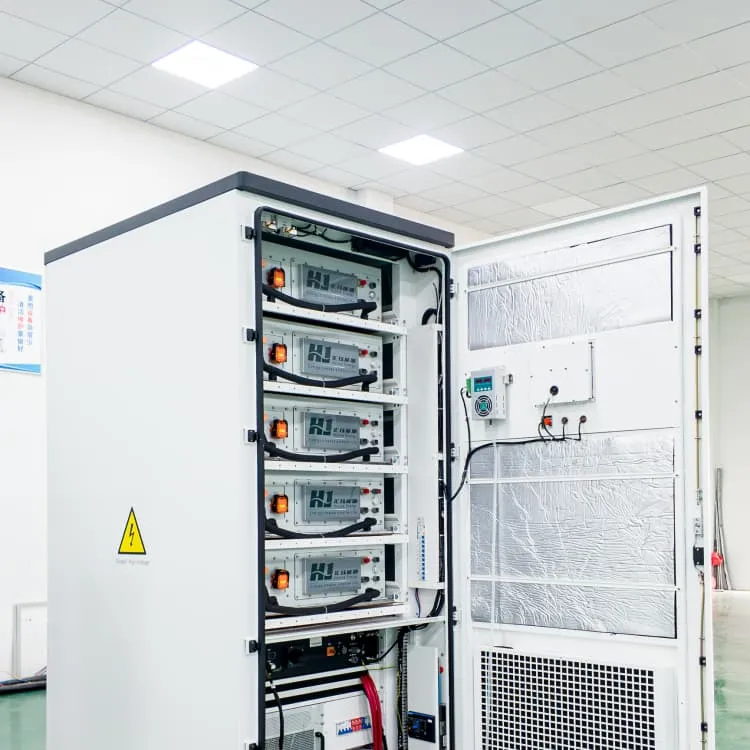

Lithium-iron phosphate batteries officially surpassed ternary batteries in 2021, accounting for 52% of installed capacity. Analysts estimate that its market share will exceed 60% in 2024. The first vehicle to use LFP batteries was the Chevrolet Spark EV in 2014. A123 Systems made the batteries.
Multiple lithium iron phosphate modules are wired in series and parallel to create a 2800 Ah 52 V battery module. Total battery capacity is 145.6 kWh. Note the large, solid tinned copper busbar connecting the modules. This busbar is rated for 700 amps DC to accommodate the high currents generated in this 48 volt DC system.
Lithium iron phosphate modules, each 700 Ah, 3.25 V. Two modules are wired in parallel to create a single 3.25 V 1400 Ah battery pack with a capacity of 4.55 kWh. Volumetric energy density = 220 Wh / L (790 kJ/L) Gravimetric energy density > 90 Wh/kg (> 320 J/g).
Negative electrodes (anode, on discharge) made of petroleum coke were used in early lithium-ion batteries; later types used natural or synthetic graphite. Multiple lithium iron phosphate modules are wired in series and parallel to create a 2800 Ah 52 V battery module. Total battery capacity is 145.6 kWh.


The future of 5G is clear: more base stations, wider coverage, and improved connectivity. Industry forecasts suggest that by 2025, the total number of 5G base stations worldwide will surpass 5 million. This expansion will be driven by ongoing urbanization, demand for high-speed connectivity, and technological advancements.
China is the main competitor of the United States in the race for the title of leader in 5G deployment. By 2024, the Middle Kingdom had installed over 1.2 million 5G base stations and already has over 600 million subscribers .
By 2026, private 5G networks are expected to drive the need for an additional 500,000 base stations worldwide. Large enterprises, factories, and industrial zones are adopting private 5G to support automation, robotics, and AI-driven processes.
They help fill coverage gaps, improve network reliability, and handle high data traffic. In cities, more than 60% of 5G base stations are small cells, placed on rooftops, lampposts, and building facades. These mini base stations are crucial for delivering consistent 5G speeds in crowded areas like stadiums, shopping malls, and business districts.
5G networks divide coverage areas into smaller zones called cells, enabling devices to connect to local base stations via radio. Each station connects to the broader telephone network and the Internet through high-speed optical fiber or wireless backhaul.
RAN sharing is a method of deployment where both private and public 5G networks utilize the same 5G gNB (base station) infrastructure. Although the RAN is shared, the core networks (control and user planes) can either stay separate or be partially integrated, based on the arrangement. By sharing RAN resources:
Core network sharing is less common. Even core network sharing would provide further savings, limited possibilities to differentiate services and strategy decrease its attractiveness from operator perspective. 5G networks are expected to incur a higher cost of deployment to meet throughput requirement and demand and to provided sufficient coverage.
Selected 5G base stations in China are being powered off every day from 21:00 to next day 9:00 to reduce energy consumption and lower electricity bills. 5G base stations are truly large consumers of energy such that electricity bills have become one of the biggest costs for 5G network operators.